
Live Performance 11 hours ago
What Is Live Performance and Why Is It Important for Musicians?
There is a moment that every musician who has ever stepped onto a stage knows. It happens in the seconds before the first note. The lights are up, the crowd is present, the instrument is in your hands or the microphone is in front of your face, and everything that has been rehearsed, recorded, and imagined in private suddenly becomes real in a way that no studio session, no streaming platform, and no perfectly produced album can replicate. The room is breathing. The audience is waiting. And what happens next will never happen exactly this way again. That irreproducible quality, the radical nowness of music delivered live in front of real human beings, is what live performance actually is at its most fundamental level. It is not simply a way to promote recorded music. It is not simply a revenue stream in a challenging industry. It is the oldest, most direct, and most humanly essential form of musical communication that exists, and for musicians who understand what it can do for their artistry, their career, and their connection to the people they make music for, it is irreplaceable. This article is about understanding live performance completely: what it demands, what it gives back, and why it remains the beating heart of a meaningful musical life.
Defining Live Performance Beyond the Stage
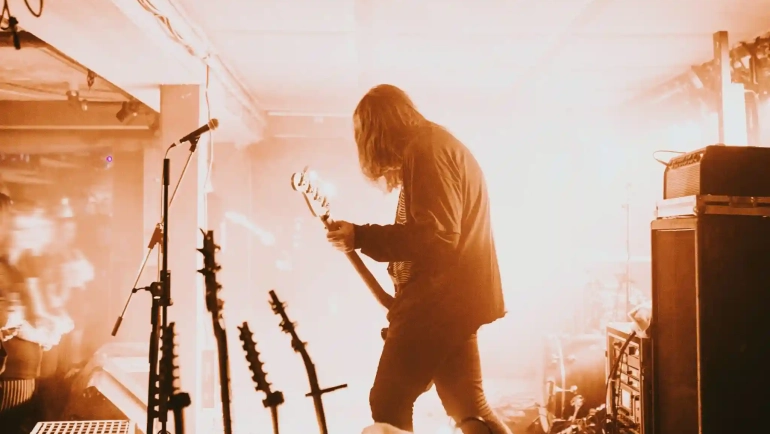
Live performance in its broadest sense is any musical presentation delivered in real time to an audience that is present for the experience. This definition encompasses an enormous range of contexts, from the arena concert attended by eighty thousand people to the coffee shop set played for a dozen distracted customers, from the symphony hall performance to the busking session on a city street corner, from the festival main stage to the intimate seated show in a two-hundred-capacity venue.
What unites all of these contexts and distinguishes them from recorded music is the shared temporal presence of performer and audience. In recorded music, the moment of performance has already passed. The listener engages with a document of something that happened. In live performance, the moment of performance is happening now, for both the performer and the audience simultaneously, and that simultaneity creates a quality of experience that recorded music is constitutionally incapable of producing. The energy of the room, the eye contact between performer and audience member, the collective breath of a crowd that is moved by the same moment at the same time, the mistakes that become unexpected beauty, the spontaneous extensions of songs that are working, these are the textures of live performance that make it a fundamentally different art form from recording rather than simply a lower-fidelity version of the same thing.
Understanding live performance as a distinct art form rather than as a promotional extension of recorded music is the most important conceptual shift any musician can make. Musicians who treat live shows primarily as opportunities to sell albums or generate streaming plays are using the wrong frame. Musicians who understand the live show as its own artistic territory, with its own demands, its own possibilities, and its own relationship with the audience, are positioned to use it in ways that build careers, deepen artistry, and create the kind of audience loyalty that sustains a musical life over decades rather than seasons.
The Historical Roots of Live Musical Performance
The relationship between musicians and live audiences is as old as human culture itself. Before recording technology existed, live performance was the only form in which music could be experienced at all. Music was inseparable from the physical presence of the musician, and that presence was the entire experience. The troubadours of medieval Europe, the griots of West Africa, the classical musicians of Imperial China, and the folk singers of every agricultural tradition on every continent all understood music as fundamentally a live art, delivered in the presence of listeners whose response was part of the performance itself.
Why Live Performance Matters to Musical Development
The importance of live performance for musicians extends far beyond its commercial implications. At its most fundamental level, performing live is one of the most powerful accelerants for musical development available, and musicians who play live regularly develop faster, more robustly, and more completely than those who work primarily in the studio or in private practice.
The reason is rooted in what performance demands of a musician. In the practice room, you can stop, correct, restart, and refine indefinitely. In the recording studio, you can punch in corrections, edit imperfections, and construct a performance from the best moments of multiple takes. On stage, you cannot. Whatever happens, happens, and you must navigate it in real time with the full attention of an audience. This demand for real-time musical problem-solving develops capabilities that no other form of musical work quite replicates. The ability to recover from a mistake without breaking the emotional thread of a performance. The ability to read the room and adjust your dynamic, your pacing, and your energy in response to the audience’s attention. The ability to find your way back to the music when your concentration breaks or something goes wrong with the equipment. These are all skills that only develop through repeated live performance experience.
Stage Presence as a Distinct Artistic Skill
Stage presence is one of the most discussed and least understood qualities in live performance. Most people recognize it immediately when they see it: the performer who commands the room from the moment they step on stage, whose physical presence and energy create a field of attention that makes it impossible to look away. Most people also sense its absence: the technically accomplished musician who somehow fails to generate connection, who plays the notes correctly but leaves the audience watching rather than feeling.
Stage presence is not a personality trait that some musicians are born with and others are not. It is a learnable skill that develops through deliberate practice and accumulated performance experience. At its core, stage presence is the ability to be fully present in the moment of performance, to inhabit the music physically and emotionally in a way that communicates through every dimension of your body, not just through the notes you play or sing. Musicians who develop strong stage presence typically share several qualities: a clear physical relationship to their instrument and to the space they occupy, a genuine emotional investment in the music they are performing rather than a technical orientation toward executing the notes correctly, an awareness of the audience that allows them to include rather than ignore the people they are performing for, and a comfort with silence and space that allows music to breathe rather than filling every moment with sound.
Developing stage presence requires the same kind of deliberate practice that develops technical musicianship. Video-recording performances and watching them back critically, working with performance coaches or trusted musical mentors, studying the stage presence of musicians you admire, and above all, performing regularly enough that the mechanics of being on stage become comfortable enough to allow genuine presence, all of these practices contribute to the development of this essential quality.
The Role of Live Performance in Finding Your Musical Identity
One of the most profound and least discussed benefits of regular live performance is its role in helping musicians discover and clarify their own musical identity. In the studio, there is always time to reconsider, to try different approaches, to construct a version of yourself that may be more aspirational than actual. On stage, you are confronted with who you actually are as a musician in the most direct and unfiltered way possible.
What songs do audiences respond to most strongly? What moments in your set feel alive and what moments feel dead? What aspects of your musical personality connect most directly with the people in the room? These are questions that live performance answers with a clarity and immediacy that no amount of studio work or private reflection can match.
The Commercial Importance of Live Performance for Musicians
The commercial landscape of the music industry has shifted dramatically over the past two decades, and live performance has emerged as the most economically significant revenue stream for most working musicians at every level of the industry. Understanding why this shift has occurred and what it means practically for musicians building careers helps clarify why investment in live performance skills, relationships, and infrastructure is one of the most important strategic decisions a musician can make.
The economics of recorded music changed catastrophically for most musicians with the transition from physical media sales to streaming. While streaming has increased overall music consumption dramatically, the per-stream royalty rates paid by streaming platforms produce meaningful income only at very large scale, which means the recorded music revenue available to the vast majority of working musicians has declined substantially from what it was in the era of album sales. Against this backdrop, live performance revenue has become not just important but essential for most musicians who intend to support themselves through music.
Live performance revenue is also structurally more favorable to musicians than recorded music revenue in several important respects. Concert tickets are priced in ways that more directly reflect the value of the live experience, and musicians typically retain a much higher proportion of ticket revenue than they do of recorded music revenue, where streaming platform margins, label deals, and distribution costs all take substantial shares. Merchandise sales at live shows represent an additional revenue stream that is largely absent from the recorded music ecosystem. And the audience relationships built through live performance are the foundation of the sustained fan loyalty that generates ongoing revenue across multiple formats and multiple years.
Building a Tour Strategy That Sustains a Career
For musicians at the emerging to mid-level of their careers, the development of a coherent touring strategy is one of the most important and most practically demanding aspects of building a sustainable music career. Touring is not simply the act of booking shows in different cities. It is a complex logistical, financial, and artistic undertaking that requires careful planning, realistic financial modeling, and a clear understanding of the relationship between geographic market development and audience growth.
The most common mistake that emerging musicians make in their touring strategy is attempting to cover too much geographic territory too quickly with insufficient audience development in each market. Playing a single show in twenty different cities is almost always less effective than playing multiple shows in five cities over the same period, because audience development requires repeated presence in a market rather than a single visit. The musicians who build strong regional markets before expanding nationally, and who return to markets regularly enough to maintain and deepen the audience relationships they have built, consistently develop more durable career foundations than those who attempt national or international reach before their local and regional presence is sufficiently established.
The Audience Relationship That Only Live Performance Creates
Of all the benefits that live performance offers musicians, the deepest and most lasting is the quality of audience relationship that only the live experience can create. The connection formed between a musician and an audience member in the shared space of a powerful live performance is qualitatively different from any connection formed through recorded music, however loved and personally meaningful that recorded music may be.
This difference has a neurological basis that researchers in social neuroscience have begun to document. Studies on entrainment, the phenomenon in which physiological rhythms synchronize between individuals in shared social contexts, have found that audience members at live musical performances show measurable synchronization of their neural oscillations, heartbeats, and breathing patterns with each other and with the performers. This physiological synchronization is the biological substrate of the felt sense of communal experience that defines great live performance, and it simply does not occur through the individual, private experience of listening to recorded music.
The audience member who has experienced this physiological and emotional synchronization with a musician during a powerful live performance carries something from that experience that no recording can contain. They carry a felt memory of shared presence, of having been in a room where something real happened with other real people, and that memory attaches to the musician in a way that transforms the relationship from admiration to genuine personal connection. This is the foundation of the deep fan loyalty that sustains musical careers over decades, and it can only be built through the live experience.
Managing Performance Anxiety and the Mental Game of Live Music
Performance anxiety is one of the most universal experiences in music and one of the least openly discussed. The statistics on performance anxiety in musicians are striking: research suggests that between fifty and seventy percent of professional musicians experience performance anxiety significant enough to interfere with their performance at some point in their career, and for many musicians, anxiety management is an ongoing aspect of their professional practice rather than a problem that resolves with experience.
Understanding performance anxiety neurologically is useful because it reveals that the physiological experience of stage fright, the elevated heart rate, the dry mouth, the heightened sensory awareness, is not a malfunction. It is the body’s arousal system responding to a situation it has identified as high-stakes, and that arousal is not inherently incompatible with great performance. Many of the world’s most celebrated performers have described experiencing intense pre-performance anxiety and channeling that energy into performance rather than suppressing it. The distinction between anxiety that undermines performance and arousal that enhances it is largely a matter of interpretation and of the mental habits developed through experience and deliberate practice.
Final Thought
Live performance is not one component of a musician’s career among many equal components. It is the place where music becomes most fully itself, where the relationship between musician and audience is most direct, most honest, and most capable of creating the kind of genuine human connection that justifies the enormous investment of time, craft, courage, and vulnerability that a musical life requires. Every musician who steps onto a stage, regardless of the size of the crowd or the prestige of the venue, is participating in something ancient and essential: the act of one human being offering music to other human beings in the shared space of the present moment. That act, practiced with intention, developed with discipline, and offered with genuine openness, is what builds the musical careers and the audience relationships that last. It is also, for the musicians who embrace it fully, one of the most alive experiences that human existence has to offer.